Ronda vs Setenil de las Bodegas: Which Should You Visit (or Both?)
 Bridge & gorgeCheck price
RondaandSetenil.com is reader-supported. When you book through our GetYourGuide links we may earn a commission, at no extra cost to you.
Historical amounts are approximate euro conversions using the ECB reference rate of 15 October 2026. They are not live quotes; check the tour for your date. ECB · 15/10/2026
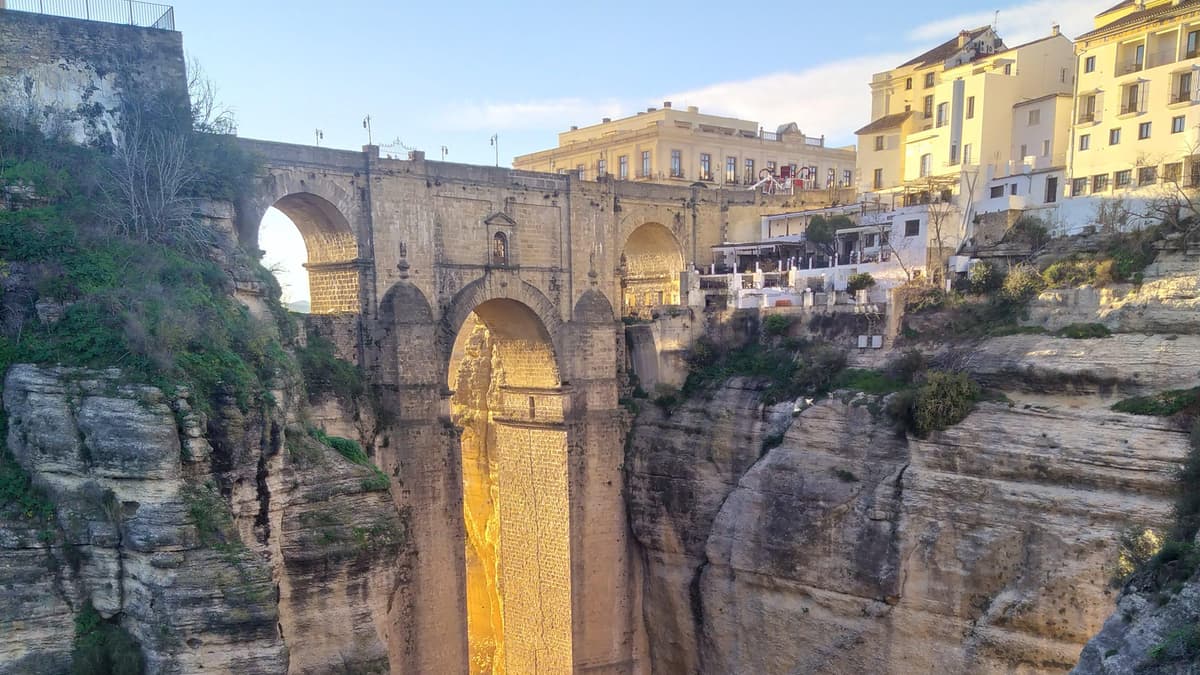
If you only have time for one, visit Ronda. It has the bigger sights: the 98 m-high Puente Nuevo over El Tajo gorge, one of Spain’s oldest bullrings and a whole old town. Setenil de las Bodegas is smaller and stranger: a white village whose houses are built under huge rock overhangs, and you can see it in an hour or two. The two are only 18–20 km apart, about 20 minutes by car, so most visitors do both in a day. That’s what we recommend if you can.
Below we compare the two place by place (scenery, time needed, food, crowds, transport, overnight stays and photography) and give a verdict for each type of traveller.
Ronda vs Setenil at a glance
| Ronda | Setenil de las Bodegas | |
|---|---|---|
| What it is | Town of about 33,000 people (INE, 2024) on a cliff at ~730 m | Small white village in a river gorge in Cádiz province |
| Signature sight | Puente Nuevo (98 m, 1751–1793) over El Tajo | Cave streets under the rock: Cuevas del Sol, Cuevas de la Sombra |
| Time needed | Half a day minimum; a full day or overnight is better | 1–2 hours |
| Paid sights | Bullring and museum, gorge walkway, Arab Baths, Casa del Rey Moro | Few; mainly the castle tower (check hours locally) |
| Food | Wide choice, from tapas bars to formal restaurants | Tapas terraces under the rock; cured meats and chorizo |
| Crowds | Busy around the bridge from late morning | Small streets fill quickly when coaches arrive |
| Public transport | Train station and buses from Málaga, Seville, Costa del Sol | Very limited; few buses from Ronda, impractical train |
| Overnight | Plenty of hotels and apartments | A few rural houses, some in caves |
| Best photos | Bridge from below the gorge, viewpoints at dawn | Rock-roofed streets, village from Mirador del Carmen |
Scenery: dramatic gorge vs houses under the rock
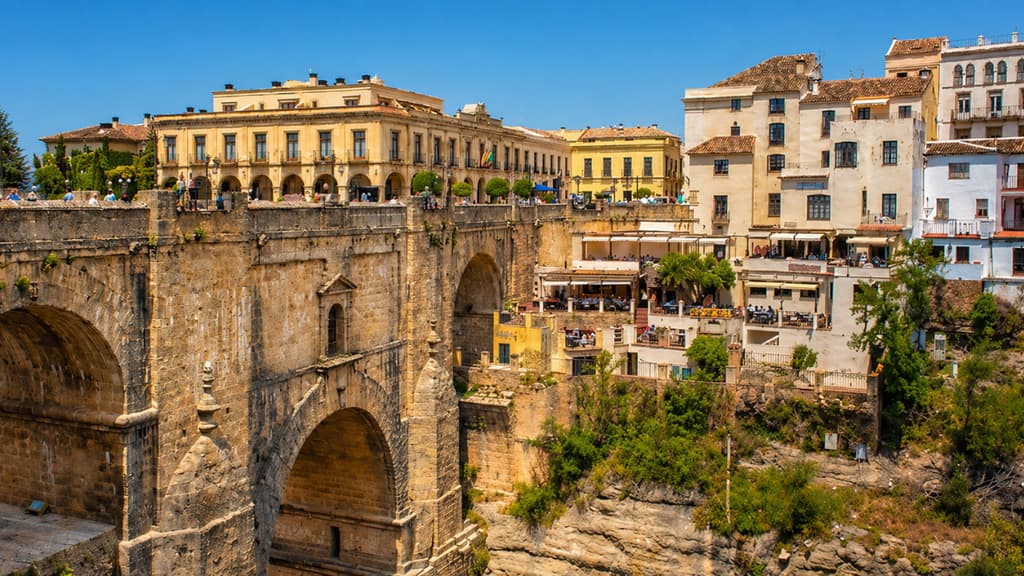
Ronda is built on a plateau that is split in two by El Tajo, the gorge of the Guadalevín river. The Puente Nuevo spans it and links La Ciudad (the old town) with El Mercadillo. Views from the clifftop paths and viewpoints stretch across farmland to the mountains. Ronda’s appeal is its size and height: sheer rock walls and a bridge built into them.
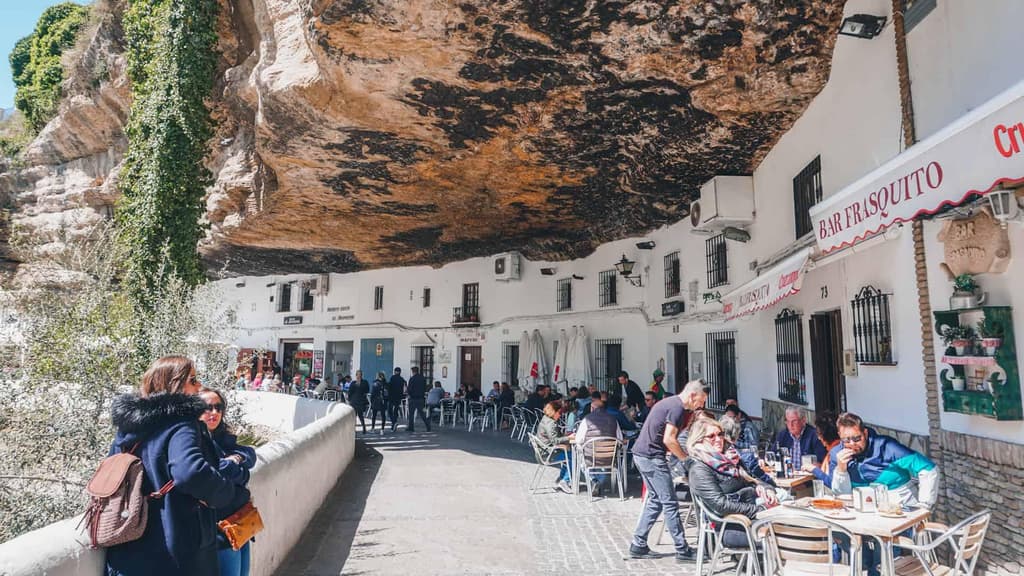
Setenil works the other way round. Instead of perching on a cliff, it’s tucked into one. The houses use the overhanging rock of the Río Trejo gorge as their roof. On Calle Cuevas de la Sombra the rock closes in overhead, while Cuevas del Sol gets the sun. It’s the more unusual place, and it’s small enough to see in one loop.
 Small groupCheck price
How much time do you need in Ronda vs Setenil?
- Ronda: 2–3 hours covers the bridge, a viewpoint and a quick look at the old town. 4–5 hours lets you add the bullring, a walk down the gorge and a relaxed lunch. Staying the night is better still, because the town empties once the coaches leave. See things to do in Ronda.
- Setenil: 1–2 hours is enough for the cave streets, the castle tower area, the church and a tapa. See things to do in Setenil de las Bodegas.
Day tours follow the same split: typically 2–3 hours in Ronda and 1–2 hours in Setenil.
Things to do
Ronda
- Cross the Puente Nuevo and look out from the free viewpoints next to it, such as Mirador de Aldehuela.
- Walk down from Plaza María Auxiliadora to see the bridge from below. There’s a free path, and the paid Camino del Desfiladero del Tajo walkway, which was extended in September 2026 (book at desfiladerodeltajo.info and check the current price).
- Visit the Plaza de Toros (inaugurated 1785, built in stone) and its museum (paid entry).
- Wander La Ciudad: the Arab Baths, the Puente Viejo, the Jardines de Cuenca and Casa del Rey Moro.
- Walk the Alameda del Tajo park and its clifftop balconies.
Setenil
- Walk Calle Cuevas de la Sombra and Cuevas del Sol, and the stepped Calle Herrería.
- Climb to the Torre del Homenaje, the remaining tower of the Nasrid-era castle, and the Iglesia de la Encarnación.
- Look out over the rooftops from Mirador del Carmen.
- Have a tapa on a terrace under the rock.
Food: more choice vs a better setting
Ronda has far more choice, from tapas bars in El Mercadillo to sit-down restaurants and local wineries in the Serranía de Ronda. Places with views of the bridge charge for them. Walk a few streets back for better value.
Setenil is all about the setting. Eating a plate of local chorizo, cured Ibérico meats or sierra cheese under a rock ceiling is the experience. The choice is limited, and on weekends and in high season the terraces fill quickly.
Crowds
Both get busy from about 11:00 to 16:00, when the coach tours from Málaga, the Costa del Sol and Seville arrive. In Ronda the crowds gather around the bridge and the main viewpoints, but the town is big enough to escape them. In Setenil the narrow cave streets feel crowded much sooner. To avoid the peak, go to Setenil early in the morning or late in the afternoon. With a car, do Setenil first and Ronda later, or the other way round from the direction the tours come. Spring and autumn are calmer than summer. See the best time to visit.
Getting there
- Ronda is easy to reach. It’s about 95 km / 1 h 35 from Málaga (A-357, A-367), about 127 km / 1 h 45 from Seville, and just over an hour from Marbella via the A-397. Damas and Avanza buses run from Málaga and the coast, and Damas runs from Seville. Ronda also has a railway station, but in 2026 the line through it has been closed for long periods for storm repairs, with Renfe replacement buses, so check renfe.com before planning on the train.
- Setenil is hard to reach without a car or a tour. Autocares Sierra de las Nieves runs a few weekday buses from Ronda, with few or none at weekends (check the current timetable). The station is about 5 km from the village. A taxi from Ronda costs roughly €25–30 each way. If you drive, don’t take the car into the cave streets. Park at the top of the village or in the small car parks near the entrance.
Full details are in how to get to Ronda and Setenil.
Staying overnight
Ronda is the obvious base. It has a wide range of hotels, guesthouses and apartments in both halves of town. In the evening and early morning, when the day-trippers have gone, it’s at its most beautiful. Start with our guide to where to stay in Ronda. Setenil has only a handful of rural houses and apartments, some built into the rock. It’s memorable for one night, but you’ll need a car.
Photography
- Ronda: the classic shot is the Puente Nuevo from below. Take the path down from Plaza María Auxiliadora, ideally in the morning. Mirador de Aldehuela and the Jardines de Cuenca give side-on views, and the Alameda del Tajo looks west at sunset.
- Setenil: the rock-roofed streets work in any light, but they’re best without crowds. Mirador del Carmen shows the whole village from above. The contrast between the bright Cuevas del Sol and the shaded Cuevas de la Sombra is strong, so expose for the highlights.
 Shuttle trainCheck price
Verdict: which should you visit?
- First-time visitor with one day: both, on a tour or by car. Ronda is the main event and Setenil the unusual extra.
- Only half a day: Ronda.
- Photographer: both, but stay overnight in Ronda for the early-morning gorge light.
- History lover: Ronda, ideally with a guided walk.
- Foodie: Ronda for choice and wine. Setenil for one memorable tapas stop.
- Families or limited mobility: Setenil is compact. Ronda’s gorge paths are steep, but the bridge and the viewpoints are flat and easy.
- Without a car or a tour: Ronda. It’s easy by bus, while Setenil isn’t.
How to combine Ronda and Setenil in one day
- Morning, Setenil (1–1.5 h): arrive by about 10:00, before the coaches. Park at the top, walk the cave streets and have a coffee under the rock.
- Drive to Ronda (~20 min): 18–20 km via Arriate on the A-374 / MA-7400.
- Midday, Ronda (4+ h): park at Plaza del Socorro or Martínez Astein. See the bridge and viewpoints, have lunch, walk into La Ciudad, and walk down the gorge in the afternoon.
- Late afternoon: catch the light from the Alameda del Tajo, then drive back or stay the night.
Without a car, a day tour is the easiest way to see both. Most tours from Málaga cost from about €24.98–€58.89 (Oct 2026; prices change). Compare them in our best Ronda & Setenil tours from Málaga, or see the full Ronda & Setenil day trip guide.
FAQ
Yes. It’s only about 20 minutes from Ronda, and its houses built under the rock are unlike anything in Ronda. One to two hours is enough. Ronda has more to see and do, with its gorge, the Puente Nuevo, the bullring and the old town, so pick it if you can only visit one. Setenil is the more unusual sight and makes a perfect add-on. About 18–20 km, roughly 20 minutes by car via Arriate. A taxi costs roughly €25–30 each way. Buses are few and mostly on weekdays. Yes. That’s the standard day trip: about 1–2 hours in Setenil and 2–4 hours in Ronda, either on a tour from Málaga or Seville or by car. Ronda, for most people: it has far more accommodation and is easy to reach by bus. Setenil has a few rural and cave houses that suit travellers with a car.Is Setenil de las Bodegas worth visiting if I'm going to Ronda?
Which is better, Ronda or Setenil?
How far is Setenil from Ronda?
Can you see Ronda and Setenil in one day?
Should I stay overnight in Ronda or Setenil?
More questions answered
FAQ · 7 min read
Where to Stay in Ronda: Best Areas & Is It Worth It?
Where to stay in Ronda: old town vs El Mercadillo, station area or a countryside cortijo, plus why an overnight beats a day trip and staying in Setenil.
Read the answers →FAQ · 8 min read
Tour or Rental Car for Ronda & Setenil? Costs Compared
Tour or rental car for Ronda and Setenil? We compare real costs, time, flexibility, the A-367 and A-397 roads and parking, then say who should pick which.
Read the answers →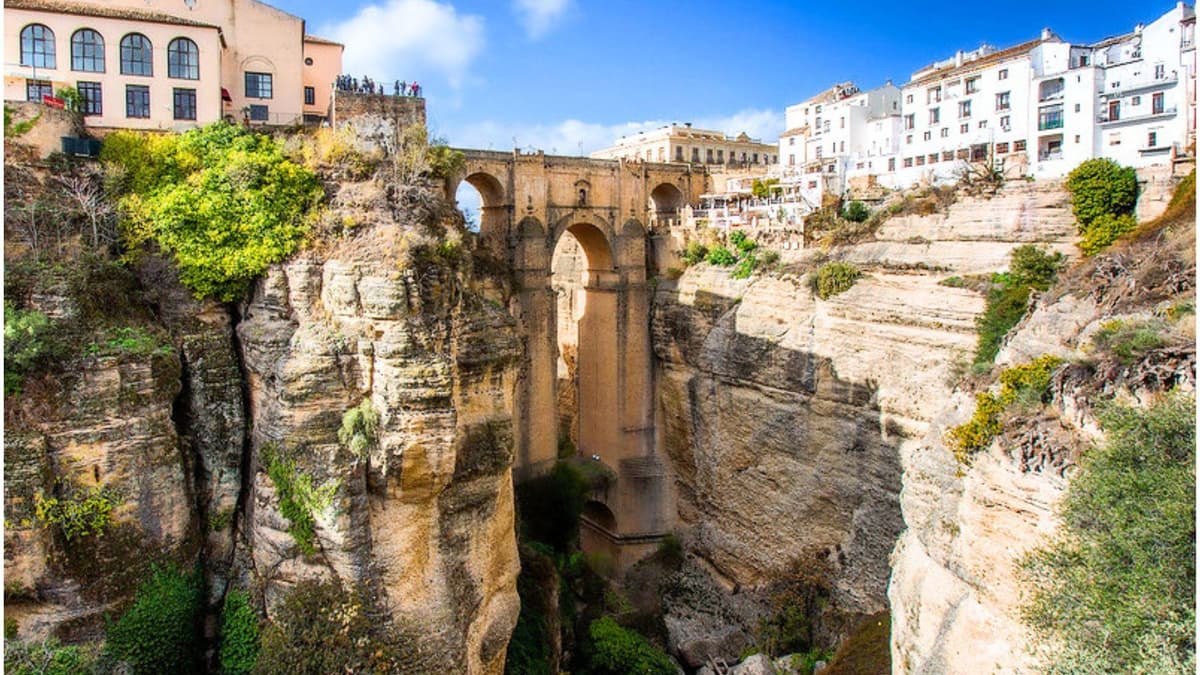
FAQ · 6 min read
Best Time to Visit Ronda & Setenil (Month by Month)
The best time to visit Ronda and Setenil is May, June or September. Month-by-month weather, rain, crowds, daylight and events like the Feria Goyesca.
Read the answers →